Medlars: The Fruit Eaten Rotten
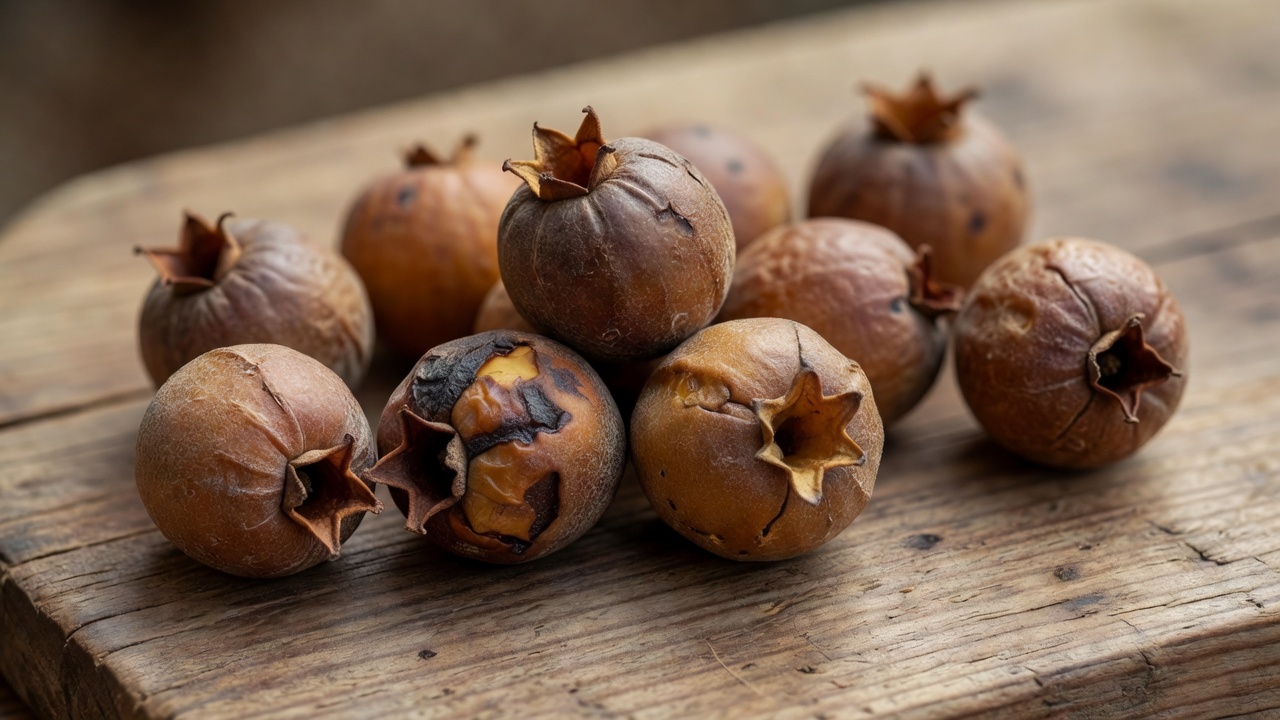
Few foods challenge our modern sensibilities quite like the medlar (Mespilus germanica). In an age where fruit is discarded at the first sign of a brown bruise, the concept of a fruit that is entirely inedible until it begins to physically decay is deeply counterintuitive.
Yet, for centuries, the medlar was a treasured winter delicacy. It appears in the writings of Chaucer, is famously disparaged by Shakespeare, and held a prominent place in Tudor banquet halls. It is a fruit defined entirely by a process known as bletting.
The Paradox of Bletting
If you pluck a medlar from the tree in late October, it resembles a small, russeted apple with a prominent, almost crown-like calyx at the bottom. Bite into it, and you will be met with aggressively harsh tannins and a texture akin to dry sawdust. It is virtually unpalatable.
To eat a medlar, one must wait. The fruits are traditionally harvested hard and stored in a cool, dry place—often laid out on sawdust or straw—for several weeks. Slowly, cellular breakdown occurs. The flesh darkens to the color of wet earth, the skin wrinkles, and the internal structure collapses.
"The medlar presents a striking culinary paradox: it reaches its peak of perfection at the precise moment it appears entirely rotten."
Once bletted, the medlar is transformed. The flesh becomes soft, with a texture similar to baked apple sauce or thick fruit butter. The flavor profile is extraordinary, carrying deep notes of cinnamon, vanilla, citrus, and sweet wine.
Culinary History and Preparation
In medieval England, when sugar was an exorbitant luxury and fresh winter fruit was non-existent, the naturally sweet medlar was a godsend. It was commonly eaten raw, squeezed directly from its wrinkled skin like a natural tube of fruit paste, often accompanied by port or robust cheese.
The most famous preparation, however, is Medlar Jelly. Because the fruit retains high levels of pectin even when bletted, boiling the squishy fruits with water and sugar produces a stunning, clear amber jelly. The flavor of medlar jelly is complex and sharp, making it a traditional accompaniment to game meats like venison and pheasant.
Another historical recipe is "Medlar Cheese"—not a dairy product, but a dense, sliceable fruit paste akin to quince membrillo, created by slow-cooking the bletted pulp with sugar and spices until it sets firm.
Why We Stopped Eating Them
The medlar's fall from grace is easy to map. As global trade brought citrus, bananas, and year-round apples to northern Europe, the necessity for a winter-storage fruit vanished. More critically, the medlar's reliance on bletting made it entirely unsuited for commercial retail.
A supermarket cannot stock a fruit that requires a month of monitored decay before it can be consumed. The medlar requires patience, understanding, and a willingness to embrace imperfection—qualities not highly prized in modern supply chains.
Growing Your Own
For heritage orchardists, the medlar tree is a magnificent addition. It is highly ornamental, producing large, striking white blossoms in late spring and brilliant copper foliage in autumn.
- Climate: Medlars are hardy and thrive in temperate climates. They are self-fertile, meaning a single tree will produce fruit.
- Rootstock: They are typically grafted onto quince or hawthorn rootstock to manage their size.
- Pest Resistance: They are remarkably disease-resistant and rarely troubled by the pests that plague standard apple trees.
Reviving the medlar is not just about preserving an obscure fruit; it is about reconnecting with the historical rhythms of the seasons. It teaches us that nature's timeline does not always align with our demand for immediate gratification.