Quince: The Golden Apple of Antiquity
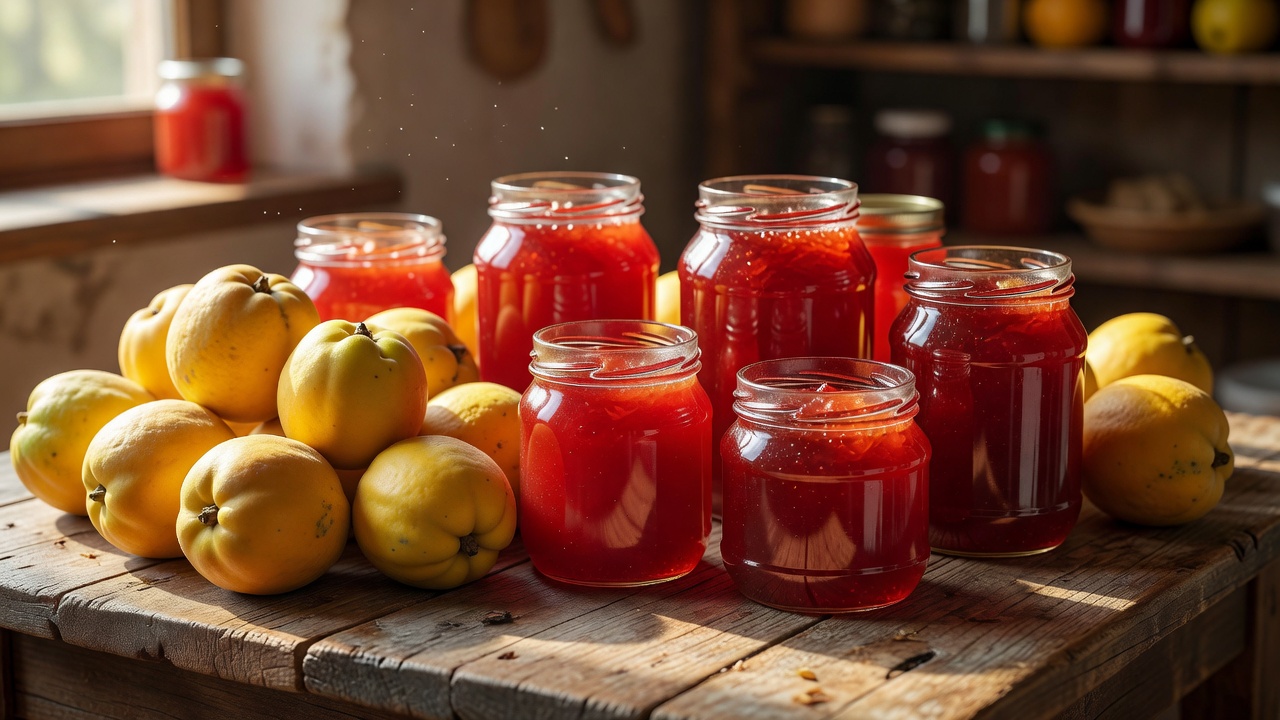
To hold a raw quince is to be deeply deceived. Covered in a delicate, downy fuzz and smelling intoxicatingly of rose, guava, and ripe apple, it invites a spontaneous bite. Those who succumb to this temptation will regret it instantly. The flesh of the raw quince (Cydonia oblonga) is rock-hard, aggressively sour, and choked with abrasive tannins that immediately dry out the mouth.
Yet, this uncompromising pome fruit is one of the oldest known to human agriculture, predating the cultivation of the apple. Many historians believe that the mythological "golden apples" awarded to Aphrodite by Paris of Troy were, in fact, quinces.
The Culinary Transformation
The magic of the quince reveals itself only through application of heat and time. When poached slowly in a light syrup, a remarkable chemical reaction occurs. The high levels of tannins break down, the astringency mellows into a rich, complex sweetness, and—most dramatically—the pale, creamy flesh turns a vibrant, translucent crimson.
"The transition of the quince from a harsh, unyielding block of sour wood into a tender, ruby-red delicacy is one of the most profound alchemical shifts in all of cookery."
Because the fruit is incredibly rich in pectin, it is the historical foundation of all marmalades. In fact, the word "marmalade" derives directly from marmelo, the Portuguese word for quince. Before citrus became the standard, marmalade was exclusively a thick, set quince preserve.
Membrillo and Global Uses
While the quince has largely faded from mainstream British and American kitchens, it remains an undisputed staple in the Mediterranean, Middle East, and Latin America.
In Spain, the most famous application is dulce de membrillo, a dense, sliceable quince paste. It is traditionally served alongside Manchego cheese, where the floral sweetness of the membrillo provides a perfect counterbalance to the sharp, salty tang of the sheep's milk cheese.
In Persian and Moroccan cuisines, the fruit's ability to hold its shape during long cooking times makes it a prized ingredient in savory meat tagines and stews. The tartness cuts through the rich fat of lamb or pork in a way that modern apples simply cannot match, as modern apples tend to dissolve into mush during prolonged braising.
Cultivation Challenges
If the cooked quince is so spectacular, why is it so rarely grown commercially in the West today? The reasons are primarily logistical and agricultural.
Quince trees are highly susceptible to fire blight, a devastating bacterial disease that can destroy an orchard in a single season. Furthermore, the fruit bruises remarkably easily despite its hard flesh. A dropped quince will develop brown spots that rapidly lead to rot, meaning they must be harvested and packed by hand with extreme care. In an era that demands mechanical harvesting and bulletproof transportability, the quince is an economic liability.
A Slow Revival
For the home grower in a dry climate, however, a single quince tree can provide decades of culinary joy. The tree remains relatively small and produces large, pale pink blossoms in the spring that are highly attractive to pollinators.
Rediscovering the quince requires an adjustment in how we view fruit. It is not a grab-and-go snack; it is an ingredient that demands preparation. But those willing to invest a few hours of gentle simmering will be rewarded with an ancient flavor that has enchanted humanity for millennia.